





When the war ends, Sophie is a woman without possessions, without papers, without a husband—but not without courage. Without hesitation, she takes over an empty villa. She becomes an interpreter for the American military administration. She survives the chaotic postwar years through black-market dealings, with the same cool head with which she once stood up to the Gestapo. And then, in a twist no one could have anticipated, she takes back the man who betrayed her—caring for the ailing, divorced Josef without ever remarrying him, but also without abandoning him. “What can you do?” is all she says. The phrase becomes her life motto.
In 1950, at the age of sixty and penniless, Sophie emigrates to the United States. She starts out as a maid. She works her way up to become a hotel receptionist. She observes, learns, waits for the right moment—and begins to speculate on the stock market with the same level-headedness with which she had once turned a restaurant around. Within a few years, the woman who had arrived with just a suitcase became an independent, wealthy New Yorker who organized charity galas, paid hospital bills for other people’s children, and—even at ninety-seven—successfully defended herself against a mugger.
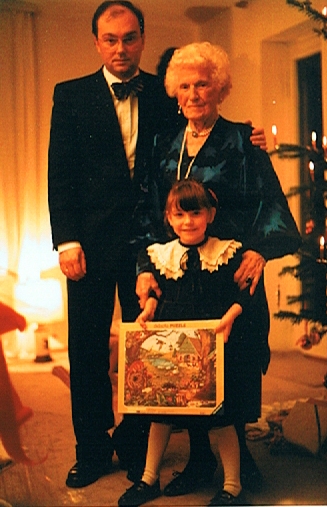
And yet a wound remains that never quite heals. In 1984, Sophie breaks a vow she had made to herself thirty-four years earlier: never to set foot on German soil again. She does it for a child named after her—Roman’s daughter, her goddaughter. She stands for the baptism in a Bavarian village church, back on German soil for the first time since her escape, and lets no one see the toll it takes on her.
Six years later, on her hundredth birthday, Sophie looks back on a life she had to rebuild from scratch twice. A few months later, she is dead, and the refrigerator from the first chapter turns out to be what it was all along: the beginning of the end. In a letter to her godchild, she sums up her life in a single sentence—the very same sentence that gives this book its title, and which sounds as if it were resigned, yet is in fact the exact opposite: a woman’s refusal to let the worst things people can do to one another rob her of her own humanity.
“What Can You Do?” tells this story not as an indictment, but through the dry, often witty, always astute voice of a woman who lost everything and rebuilt her life from scratch twice. Roman, the young nephew who has been listening to her all these years, remains the frame and the narrator—the true protagonist is and always will be Sophie herself.